
ตับแข็ง ไม่ได้เกิดจากเหล้าเพียงอย่างเดียว: รู้ทันสาเหตุ อาการท้องมาน และการรักษาโดยแพทย์เฉพาะทาง
ตับแข็งไม่ได้มีแค่เพราะเหล้า! เช็กสาเหตุ ไวรัสตับ ท้องมาน และการรักษา | พัทยา 2 คลินิก
ไขข้อข้องใจโรคตับแข็ง เกิดจากอะไรได้บ้าง? แอลกอฮอล์ ไวรัสตับอักเสบ บี ซี หรือไขมันพอกตับ พร้อมทำความเข้าใจภาวะท้องมานและการเจาะระบายน้ำในช่องท้อง โดย นพ.กัณฒิภัสส์ พัทยา 2 คลินิก
เมื่อพูดถึง “โรคตับแข็ง” (Cirrhosis) ภาพจำของคนส่วนใหญ่มักนึกถึงคนที่ดื่มสุราอย่างหนักเป็นประจำ แต่ในความเป็นจริงทางการแพทย์ พบว่ามีผู้ป่วยจำนวนไม่น้อยที่ไม่เคยดื่มแอลกอฮอล์เลยแม้แต่หยดเดียว แต่กลับตรวจพบว่าเป็นตับแข็งระยะลุกลาม
ตับแข็งไม่ใช่โรคที่เกิดขึ้นในชั่วข้ามคืน แต่เป็นผลลัพธ์สุดท้ายของการอักเสบเรื้อรังที่ทำลายเนื้อตับซ้ำๆ จนเกิดเป็น “พังผืด” เข้ามาแทนที่เนื้อตับดี ส่งผลให้ตับทำงานลดลงและนำไปสู่ภาวะแทรกซ้อนอันตราย
1. ตับแข็งเกิดจากอะไรได้บ้าง?
สาเหตุของตับแข็งมีหลากหลายปัจจัย โดยสาเหตุหลักที่พบบ่อยในประเทศไทย ได้แก่:
-
การดื่มแอลกอฮอล์เรื้อรัง (Alcohol-related Liver Disease): สุรา เบียร์ หรือไวน์ เมื่อดื่มติดต่อกันเป็นเวลานาน เซลล์ตับจะถูกทำลายโดยตรงและเกิดการสะสมของไขมันจนตับอักเสบเรื้อรัง
-
ไวรัสตับอักเสบบีและซีเรื้อรัง (Chronic Hepatitis B & C): ตัวการสำคัญที่ทำให้เกิดตับอักเสบต่อเนื่องโดยแทบไม่แสดงอาการในระยะแรก จนกระทั่งเนื้อตับกลายเป็นพังผืดและตับแข็งในที่สุด
-
ไขมันพอกตับที่ไม่ได้เกิดจากแอลกอฮอล์ (MASLD / NAFLD): พบบ่อยในผู้ที่มีภาวะอ้วนลงพุง เบาหวาน ไขมันในเลือดสูง หรือกลุ่มโรคเมตาบอลิกซินโดรม การสะสมของไขมันในเซลล์ตับทำให้เกิดการอักเสบจนกลายเป็นตับแข็งได้เช่นกัน
-
โรคภูมิคุ้มกันทำลายตับตนเอง (Autoimmune Hepatitis): ระบบภูมิคุ้มกันทำงานผิดปกติและเข้าทำลายเซลล์ตับ
-
สารพิษ ยา และสมุนไพรบางชนิด: การได้รับสารเคมี สารพิษ เช่น อะฟลาท็อกซิน (Aflatoxin) จากเชื้อรา หรือการกินยา/อาหารเสริมบางกลุ่มติดต่อกันโดยไม่ปรึกษาแพทย์
-
โรคทางพันธุกรรมและการเผาผลาญ: เช่น โรคสะสมทองแดงในตับ (Wilson’s Disease) หรือโรคสะสมธาตุเหล็กเกิน (Hemochromatosis)

โทรปรึกษา Tel 0833309366
Line ปรึกษา consult doctor หมอกัณฒิภัสส์

google map GPS เทพประสิทธิ์ 12

english slide down
2. สัญญาณเตือน: เมื่อไหร่ที่ควรสงสัยว่าตับเริ่มมีปัญหา?
ระยะแรกของตับแข็งมักไม่มีอาการชัดเจน แต่เมื่อการทำงานของตับลดลง หรือเข้าสู่ระยะตับแข็งแบบสูญเสียการทำงาน (Decompensated Cirrhosis) ร่างกายจะส่งสัญญาณเตือนดังนี้:
-
อ่อนเพลีย เบื่ออาหาร น้ำหนักลดโดยไม่ทราบสาเหตุ
-
ตัวเหลือง ตาเหลือง (ดีซ่าน) และปัสสาวะสีเข้มเหมือนน้ำชา
-
จุดแดงคล้ายใยแมงมุม (Spider Nevi) ขึ้นตามหน้าอกหรือแขน ฝ่ามือแดงผิดปกติ
-
ฟกช้ำง่าย เลือดหยุดยาก จากการที่ตับสร้างโปรตีนช่วยการแข็งตัวของเลือดได้ลดลง
-
ขาบวมทั้งสองข้าง และ ท้องโตขึ้นผิดปกติ (ภาวะท้องมาน – Ascites)
3. ภาวะท้องมาน (Ascites) และการเจาะระบายน้ำในช่องท้อง
ภาวะแทรกซ้อนที่พบบ่อยและสร้างความทุกข์ทรมานให้ผู้ป่วยตับแข็งมากที่สุดคือ “ภาวะท้องมาน” เกิดจากความดันในระบบหลอดเลือดดำตับสูงขึ้น ร่วมกับตับผลิตโปรตีนอัลบูมินลดลง ส่งผลให้น้ำรั่วซึมออกมาขังอยู่ในช่องท้อง
เมื่อมีน้ำสะสมปริมาณมาก ท้องจะบวมตึง แน่นอึดอัด หายใจลำบาก ทานอาหารได้น้อยลง และเสี่ยงต่อการติดเชื้อในเยื่อบุช่องท้อง การรักษาจำเป็นต้องใช้ยาขับปัสสาวะ ควบคุมอาหารเค็ม และในกรณีที่น้ำสะสมมาก แพทย์จะทำหัตถการ การเจาะระบายน้ำในช่องท้อง (Therapeutic Paracentesis)
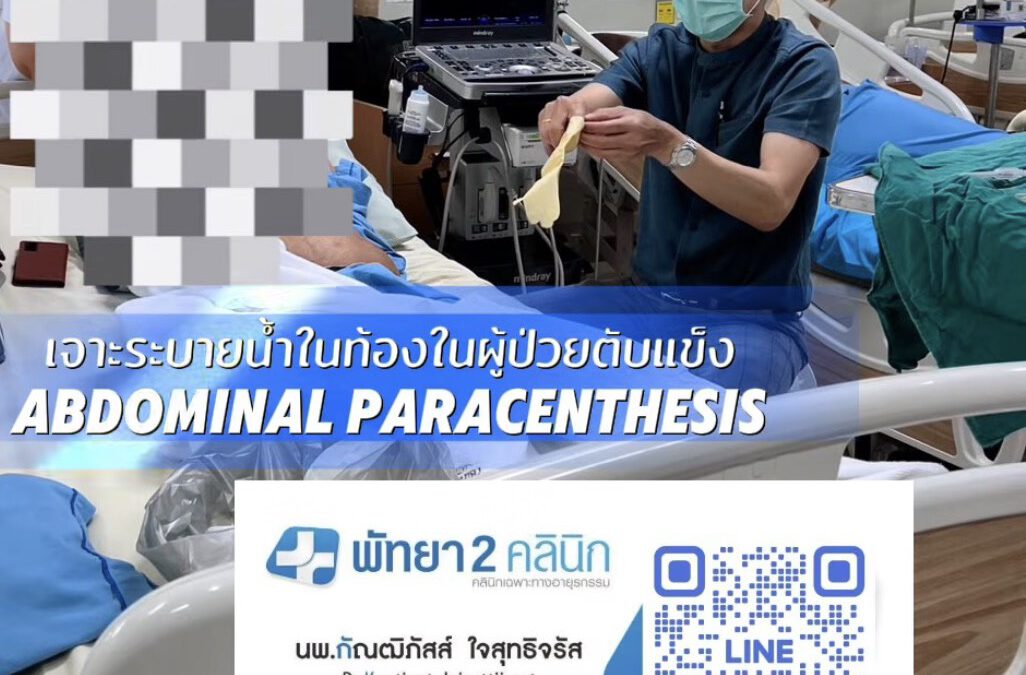
นพ.กัณฒิภัสส์ อายุรแพทย์ พัทยา 2 คลินิก กำลังทำหัตถการเจาะระบายน้ำในช่องท้อง (Paracentesis) เพื่อรักษาภาวะท้องมานในผู้ป่วยตับแข็ง
“ภาพการทำหัตถการโดย นพ.กัณฒิภัสส์ อายุรแพทย์ประจำ พัทยา 2 คลินิก ขณะกำลังทำการเจาะระบายน้ำออกจากช่องท้อง (Abdominal Paracentesis) ให้แก่ผู้ป่วยตับแข็งที่มีภาวะท้องมานรุนแรง
การทำหัตถการนี้เป็นเทคนิคทางการแพทย์เฉพาะทางที่ต้องอาศัยความประณีตและความปลอดเชื้ออย่างเคร่งครัด แพทย์จะฉีดยาชาเฉพาะที่เพื่อลดความเจ็บปวด จากนั้นใช้สายสวนขนาดเล็กระบายน้ำส่วนเกินที่คั่งอยู่ออกมาอย่างช้าๆ ซึ่งจะช่วยลดแรงดันในช่องท้อง บรรเทาอาการแน่นอึดอัด ทำให้ผู้ป่วยกลับมาหายใจได้โล่งและสบายตัวขึ้นทันทีหลังทำเสร็จ พร้อมนำตัวอย่างน้ำไปตรวจวิเคราะห์ทางห้องปฏิบัติการเพื่อประเมินการติดเชื้อและวางแผนการรักษาในระยะยาวต่อไป”
4. ป้องกันและชะลอความเสื่อมของตับได้อย่างไร?
-
งดแอลกอฮอล์เด็ดขาด: เพื่อตัดวงจรการอักเสบและไม่ทำลายเซลล์ตับที่เหลืออยู่
-
ตรวจคัดกรองและรักษาไวรัสตับอักเสบ: ปัจจุบันไวรัสตับอักเสบซีสามารถรักษาให้หายขาดได้ด้วยยาทาน ส่วนไวรัสตับอักเสบบีสามารถควบคุมเชื้อและมีวัคซีนป้องกัน
-
ควบคุมน้ำหนักและระดับน้ำตาล: ลดแป้ง น้ำตาล และไขมันทรานส์ เพื่อป้องกันภาวะไขมันพอกตับ
-
ไม่ซื้อยากินเองเรื่อยเปื่อย: ระวังยาสมุนไพรหรืออาหารเสริมที่ไม่ได้มาตรฐาน
-
พบแพทย์เพื่อตรวจอัลตราซาวด์ตับและค่าการทำงานของตับ (Liver Function Test): อย่างสม่ำเสมอทุก 6 เดือนในผู้ที่มีความเสี่ยง
ปรึกษาปัญหาสุขภาพตับและโรคอายุรกรรม ที่ พัทยา 2 คลินิก
หากคุณหรือคนในครอบครัวมีอาการแน่นท้อง ท้องโตผิดปกติ ตัวเหลือง หรือมีประวัติดื่มแอลกอฮอล์ ไวรัสตับอักเสบ อย่าปล่อยให้ตับเสื่อมจนสายเกินแก้ การวินิจฉัยตั้งแต่ระยะเริ่มต้นช่วยชะลอการดำเนินโรคและลดความเสี่ยงการเกิดมะเร็งตับได้อย่างมีประสิทธิภาพ
-
ตรวจวินิจฉัยและดูแลโดย: อายุรแพทย์ผู้เชี่ยวชาญ
-
สถานที่ตั้ง: พัทยา 2 คลินิก เทพประสิทธิ์ 12
-
ติดต่อสอบถาม / นัดหมายตรวจ: 083-3309-366 | LINE: @pattaya2clinic
++++++++++++++++++++++++++++++++++++++++++++++++++++++++++++++++++++
Cirrhosis Isn’t Just Caused by Alcohol: Understanding the Causes, Ascites, and Medical Treatment by Specialists
Cirrhosis isn’t just about alcohol! Learn about the causes, viral hepatitis, ascites, and treatment options | Pattaya 2 Clinic
What causes cirrhosis? It could be alcohol, hepatitis B or C, or fatty liver disease. Learn about ascites (fluid accumulation in the abdomen) and the procedure for draining it, explained by Dr. Kanthiphat from Pattaya 2 Clinic.
When people hear the term “cirrhosis,” they often associate it with heavy, chronic alcohol consumption. In reality, however, many patients who have never consumed a single drop of alcohol are diagnosed with advanced-stage cirrhosis.
Cirrhosis does not develop overnight; it is the final outcome of chronic inflammation that repeatedly damages liver tissue. Over time, healthy liver tissue is replaced by “fibrous tissue” (scarring), which impairs liver function and leads to dangerous complications.
1. What causes cirrhosis?
Cirrhosis can stem from various factors. In Thailand, the most common causes include:
Chronic alcohol consumption (Alcohol-related Liver Disease): Long-term, regular consumption of spirits, beer, or wine causes direct damage to liver cells and leads to fat accumulation, resulting in chronic liver inflammation. Chronic Hepatitis B & C: Major causes of persistent liver inflammation. Often asymptomatic in the early stages, the condition can progress to liver fibrosis and, eventually, cirrhosis.
Metabolic Dysfunction-Associated Steatotic Liver Disease (MASLD) / Non-Alcoholic Fatty Liver Disease (NAFLD): Frequently seen in individuals with abdominal obesity, diabetes, high blood lipids, or metabolic syndrome. The accumulation of fat within liver cells triggers inflammation, which can lead to cirrhosis.
Autoimmune Hepatitis: A condition where the immune system malfunctions and attacks the liver cells.
Toxins, Medications, and Certain Herbal Supplements: Exposure to chemical toxins—such as aflatoxin (produced by certain fungi)—or the prolonged use of specific medications or supplements without medical consultation.
Genetic and Metabolic Disorders: Conditions such as Wilson’s disease (excess copper accumulation) or hemochromatosis (excess iron accumulation).
For consultations, call: 0833309366
Line: Consult with Dr. Kanthiphat
Google Maps: Thepprasit 12
2. Warning Signs: When should you suspect that your liver is having problems?
The early stages of cirrhosis often present no clear symptoms; however, as liver function declines—or as the condition progresses to decompensated cirrhosis—symptoms may emerge. (Decompensated Cirrhosis) The body may exhibit the following warning signs:
Fatigue, loss of appetite, and unexplained weight loss.
Yellowing of the skin and eyes (jaundice), accompanied by dark, tea-colored urine.
The appearance of spider-like red marks (spider nevi) on the chest or arms, and unusually red palms.
Easy bruising and difficulty in stopping bleeding, caused by the liver’s reduced ability to produce proteins essential for blood clotting.
Swelling in both legs and an abnormally enlarged abdomen (a condition known as ascites).
3. Ascites and Abdominal Paracentesis
One of the most common and distressing complications for patients with cirrhosis is “ascites.” This occurs when pressure within the liver’s venous system increases, combined with a decrease in the liver’s production of the protein albumin, causing fluid to leak and accumulate in the abdominal cavity.
When a large amount of fluid collects, the abdomen becomes distended and tight, leading to discomfort, difficulty breathing, a reduced ability to eat, and an increased risk of infection in the abdominal lining (peritonitis). Treatment involves the use of diuretics and a low-salt diet; in cases where a significant amount of fluid has accumulated, a medical procedure called “therapeutic paracentesis” is performed to drain the fluid.
Dr. Kanthiphat, an internist at Pattaya 2 Clinic, performing a paracentesis procedure to manage ascites in a patient with cirrhosis.
“Image of the procedure being performed by Dr. Kanthiphat” An internist at Pattaya 2 Clinic performs an abdominal paracentesis—a procedure to drain fluid from the abdominal cavity—on a patient with cirrhosis and severe ascites.
This specialized medical procedure requires great precision and strict adherence to sterile techniques. A local anesthetic is administered to minimize discomfort, after which a small catheter is used to slowly drain the accumulated excess fluid. This reduces intra-abdominal pressure and alleviates bloating, allowing the patient to breathe more easily and feel immediate relief. A sample of the drained fluid is also sent to the laboratory for analysis to check for infection and guide long-term treatment planning.
4. How can you prevent or slow down the deterioration of your liver?
Avoid alcohol completely: This breaks the cycle of inflammation and prevents further damage to remaining liver cells.
Screen for and treat viral hepatitis: Hepatitis C can now be cured with oral medication, while Hepatitis B can be managed with treatment, and vaccines are available for prevention.
Manage your weight and blood sugar levels: Reduce the intake of starches, sugars, and trans fats to prevent fatty liver disease.
Avoid self-medication: Be cautious with herbal remedies or dietary supplements that lack proper standardization.
Schedule regular check-ups: For those at risk, this includes routine liver ultrasounds and liver function tests (LFTs) every six months.
Consult with a specialist regarding liver health or internal medicine concerns at Pattaya 2 Clinic.
If you or a family member are experiencing abdominal bloating… If you experience an abnormally enlarged abdomen or jaundice, or have a history of alcohol consumption or viral hepatitis, do not wait until the damage to your liver becomes irreversible. Early diagnosis can effectively slow the progression of the disease and reduce the risk of developing liver cancer.
Diagnosis and care provided by: Specialist Internal Medicine Physician
Location: Pattaya 2 Clinic, Thep Prasit 12
For inquiries / appointments: 083-3309-366 | LINE: @pattaya2clinic
Tel 0833309366
Line consult doctor Kuntipat
google map GPS Thepprasit 12 Rd.